
Basic Pumping Process
The drive system supplies force, while the controls coordinate the pumping action. Concrete follows the path from hopper to delivery cylinders and outlet.
SCHWING's ROCK valve switches between two delivery cylinders and directs their flow to the outlet. Other pump designs can use a different concrete valve.
Identify the fitted valve, cylinders and hydraulic components when reviewing a used pump. Component replacement records add to the assembly's history.
A boom truck also carries the boom, pipeline, supports and control system. The chassis forms the road-going platform. Boom movement and concrete pumping are different functions to review.
Mixer Truck and Pump Truck Roles
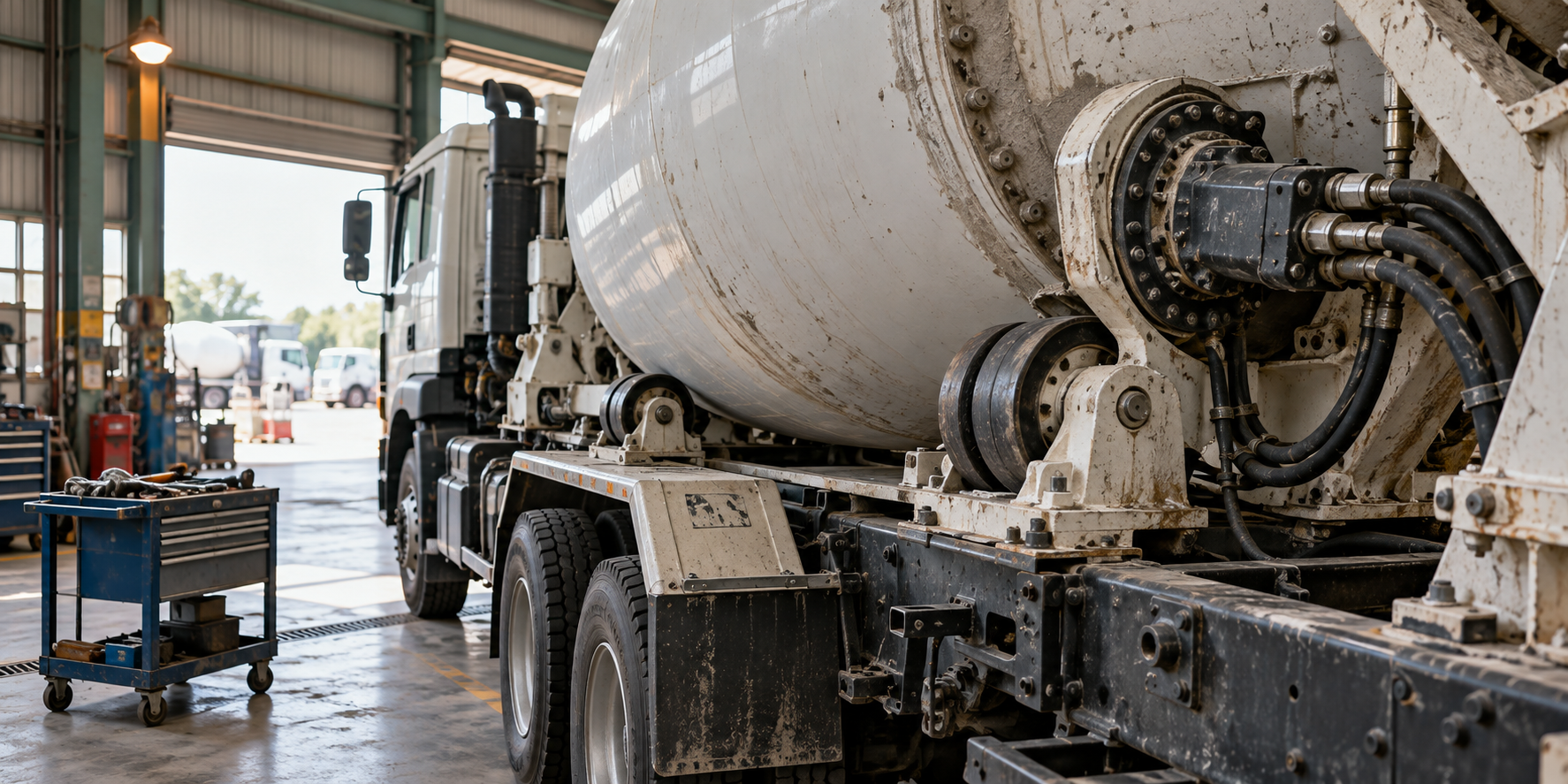
The mixer brings concrete from the batching plant and discharges into the receiving arrangement. The pump moves it along the line to the placement area. Delivery sequencing matters to both.
Keep the records for these roles separate: volume per mixer trip differs from pump output per hour, just as truck mileage differs from pumping hours.
| Record | What it describes | Read alongside |
|---|---|---|
| Mixer capacity | A defined volume field | Road load limits and drum condition |
| Pump output and pressure | Design performance under stated conditions | Current pump condition and test records |
| Truck odometer | Mileage displayed on a date | Vehicle history and maintenance |
| Pump hours or volume | Pumping-use reading on a date | Counter history and repair records |
Keep identifiers, dates and component changes with the readings. A counter gives one part of the history.
Specifications to Check
Read output and pressure with their stated conditions. SCHWING's product overview describes theoretical maximum figures and notes that maximum output and pressure are not reached simultaneously.
For the proposed work, a technical assessment considers the fitted system, concrete mix, line route, condition and wear. A brief unloaded demonstration covers a narrower question.
For any test, record the vehicle, date, conditions, personnel and findings. Operation, cleaning and maintenance follow the instructions and safety arrangements for the exact equipment.
- Pump, valve and drive identification.
- Output and pressure with their stated conditions.
- Dated usage readings and repair history.
- Current images and functional-test records.
- Included controls and accessories.
Explore pump types, pump truck models and video viewing.